
"new crop beans"
2000 article(s) found

The vicious circle of climate change, the decline of bees and the decline of coffee production
Professional baristas Please pay attention to Coffee Workshop (Wechat official account cafe_style) Global warming has affected the growth of many crops, affecting coffee, not only reducing yields, drastic changes in flavor and aroma, but also aggravating crop diseases and insect pests. But what we may not have thought is that bees, one of the most important pollinating insects in nature, are also deeply affected by climate change.

The roasting ceremony changes from brown to black: a new way of drinking coffee
Early baking in the Arab region is a simple program, although we do not have enough historical data to reproduce this baking program, but it should be roughly similar to the baking program still used in the Arab region today. Another European historian, William Pargrave (Uilliam Palgrave), wrote the Arab Journey to the Middle East in 1863 (temporary translation)

Introduction to the characteristics of Larez Yaoke Coffee Manor in Puerto Rico with a mild, supple and balanced taste.
Puerto Rico's new farm coffee is a mild, supple and well-balanced island bean with a charming single malt flavor, extremely sweet when sipped in a cup, and medium-roasted creamy and greasy texture that is often suitable for Puerto Rico island beans. Product description: the whole history of Caribbean coffee has a lot to do with the Spanish reclamation, in the 18th century.

What kind of coffee does Sidamo produce? how does Sidamo coffee taste?
Coffee is Ethiopia's main economic crop and the country's largest crop export and important industry. It accounts for 60% of Ethiopia's total export value and supports many small farms, as well as sugar, bananas and cotton. It is also Ethiopia's largest and important commodity export crop after oil, and it is also the largest export of Elaraby in Africa, in 1997.

The "Great Extinction" began that mankind was afraid that the crisis of food shortage was imminent and that it was urgent to discover new ingredients.
Professional baristas Please follow the Coffee Workshop (official Wechat account cafe_style) A new global food crisis is imminent, with analysts pointing out that people's daily supplies of potato chips, coffee and chocolate may all be affected by the "mass extinction". The Guardian reported that the International Centre for Biodiversity, a research organization, published a research report yesterday warning of "the sixth organism."

An introduction to the characteristics of the pure Ethiopian Sidamasha Chiso coffee flavor manor.
Coffee is Ethiopia's main economic crop and the country's largest crop export and important industry. It accounts for 60% of Ethiopia's total export value and supports many small farms, as well as sugar, bananas and cotton. It is also Ethiopia's largest and important commodity export crop after oil, and it is also the largest export of Elaraby in Africa, in 1997.

How to drink Papua New Guinea Paradise Bird Coffee? The suitable roasting degree of Papuan coffee
For more information on coffee beans, please follow Coffee Workshop (Wechat official account cafe_style) Papua New Guinea is an island country in the southwest of the Pacific Ocean, bordering Indonesia to the west and Solomon Islands to the east. Miraculously, Papua New Guinea has highlands and produces the only cash crop: coffee! The most famous is

Ethiopian coffee climate
Following Cafe (Wechat official account vdailycom) found that Beautiful Cafe opened its own shop for Ethiopian Coffee Climate if you like coffee, there is one more reason to pay attention to climate change. Ethiopia, an important coffee producer, will be greatly affected if global warming is not contained, and at worst nearly 60% of the country's coffee-producing areas will be affected, according to a new study.

Coffee prices soar, Kenyan farmers may be reborn
Coffee workshop (Wechat official account cafe_style) Coffee is one of Kenya's major sources of foreign exchange earnings, accounting for about 6 per cent of Kenya's total export income and 0.3 per cent of the country's gross domestic product (GDP). After several years of low ebb, Kenyan farmers may see that global coffee prices have hit record highs. In the global market

Coffee may become a luxury in the future. Can new products be cultivated to cope with the coffee crisis?
Visitors sip coffee at the Colombia International Coffee Show. (Source: Xinhua Agency) China Daily, August 7 (Xinlian) According to the BBC, when we drink latte or espresso while reading newspaper headlines, we don't feel much threat from climate change. But travel thousands of miles to where coffee originated, and you can really see

Introduction to the flavor and taste of washed Sidamo Coffee introduction of Sidamo Lion King Coffee producing area
Coffee is Ethiopia's main economic crop and the country's largest crop export and important industry. It accounts for 60% of Ethiopia's total export value and supports many small farms, as well as sugar, bananas and cotton. It is also Ethiopia's largest and important commodity export crop after oil, and it is also the largest export of Elaraby in Africa, in 1997.

British research report predicts: climate change threatens important coffee growing areas
Professional baristas please follow the coffee workshop (Wechat official account cafe_style) if you like coffee, then there is one more reason to pay attention to climate change. Ethiopia, an important coffee producer, will be greatly affected if global warming is not curbed, and at worst nearly 60 per cent of the country's coffee-producing areas may no longer be suitable for growing coffee crops, a new study says. A

Papua New Guinea Coffee introduction to Baroda Manor, Papua New Guinea
Professional coffee knowledge exchange more coffee bean information Please pay attention to Coffee Workshop (Wechat official account cafe_style) Papua New Guinea is located in the southwest Pacific Ocean, the circum-Pacific volcanic belt, is a volcanic geology, has a fertile soil, is an important natural condition for good coffee. Although it has a good environment, the share of coffee beans in the world is not high, only 0.7%.

What's the difference between new beans and old beans in coffee? The preservation of coffee beans the way coffee is stored.
Professional coffee knowledge exchange more information on coffee beans Please follow the coffee workshop (official Wechat account cafe_style). The raw beans harvested during the harvest period are called new beans, while those harvested for more than three years are called old beans. Although the recent mainstream is New Dou, Lao Dou also has loyal fans. Understand the advantages of new beans and old beans, and enjoy the flavor. ● new beans give off fresh flavor

What is the difference between new beans, old beans, old beans and high-quality old beans?
The roasting date of coffee beans is very important, and the roasting date can be used to determine whether the coffee is in a delicious state or whether it has been stored for too long or improperly stored. But do you know the state of these coffee beans before they are roasted? After the fruit is harvested, the coffee will be treated for several weeks, including the procedures of pulp removal, fermentation, drying, hand picking and so on.
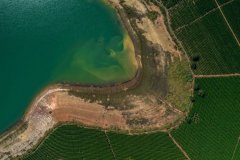
Flavor characteristics of coffee beans in Sao Paulo, Brazil 2021 the yield of Brazilian coffee decreased due to drought
After a record harvest in 2020, Brazil is likely to see one of the worst declines in coffee production in 2021. The drought brought by La Nina has hit new crops during the critical flowering period and is likely to depress the yield of Brazilian coffee. In the course of Brazil's history and economic development, coffee cultivation in Brazil has undergone significant changes, especially in terms of production location.

How long is the shelf life of coffee beans? The aging of raw coffee beans causes the coffee to be too dry and soft.
How long is the shelf life of coffee beans? Raw coffee beans can be preserved for 6 to 12 months, depending on how they are stored and the conditions under which they are stored. When you compare it with six weeks of roasted coffee beans or one or two weeks of ground coffee, it's no wonder more and more people are turning to raw coffee beans. Having said that, the better you take care of raw coffee beans, the longer their life

The story of the origin of PNG coffee in Papua New Guinea is the coffee good in Papua New Guinea?
More information on coffee beans Please follow Coffee Workshop (Wechat official account cafe_style) Papua New Guinea (Independent State of Papua New Guinea, referred to as PNG) is an island country in the southwestern Pacific Ocean, and coffee is the only cash crop in the highlands of Papua New Guinea. There are more than 2 million people in Pakistan.

Fine Coffee Learn Coffee Green beans are classified into different types according to time
Coffee fruits are processed by wet and dry methods to become coffee beans (Raw beans/Green beans). The main components of raw beans are: carbohydrates, about 49%, moisture, about 12% and protein. About 11%; chlorogenic acid, about 7.6% Alkaloids and trace elements, about 0.4%. According to the length of time, raw beans can be specifically divided into: Current Cro

Organic and Shade planting-- the ambition of small Coffee Farmers' Cooperative in Papua New Guinea
Professional baristas Please follow Coffee Workshop (Wechat official account cafe_style) Independent State of Papua New Guinea (PNG) is an island country in the southwestern Pacific Ocean, and coffee is the only cash crop in the highlands of Papua New Guinea. More than 2 million small farmers in Pakistan depend on their families.